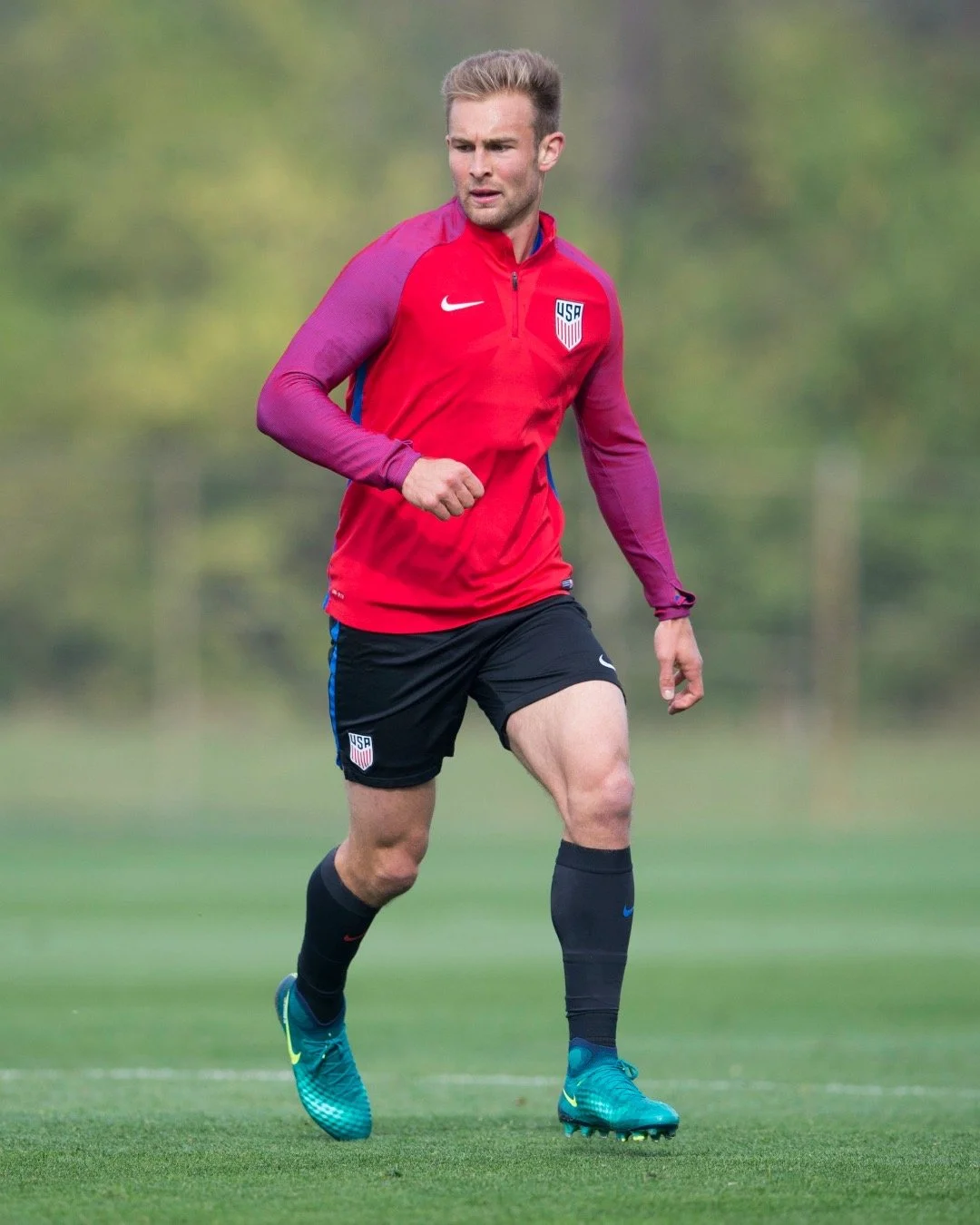
My Journey to Becoming a Professional Player
I grew up in Holly, Michigan.
Small town. No soccer culture. No pathway. No one telling me it was possible. I played for Vardar SC and I worked — but I was figuring it out alone. There was no system. No one who had been where I wanted to go showing me how to get there.
When I was 12 years old, my brother could do 30 juggles. I couldn't get to 12 in a row.
I cried.
Not because I was embarrassed. Because I realized I was behind — and nobody was coming to fix that for me. So I spent the entire summer doing one thing: juggles. Every single day. By the end of the summer I had a personal record of 1,500 in a row.
That summer set the tone for everything that came after. The gap between where you are and where you want to be closes through obsessive, deliberate repetition. Not talent. Not connections. Not luck. Just work.
The Trial.
At 16, our club team won the national championship. A scout noticed. An agent reached out.
A few months later I was on a plane to Germany for a two-week trial at SC Freiburg — a professional Bundesliga club. Sixteen years old. From a small town in Michigan. About to train alongside players who had been in professional academies since they were eight.
What I saw when I arrived changed everything about how I understood the game.
These players were different. Not just physically — technically, tactically, in their speed of play, in the way they read the game before the ball even arrived. I had been the best player in my environment my whole life. In that building I was starting from scratch.
So I did something that was uncomfortable but necessary. I looked at myself honestly. No ego. No excuses.
My first touch wasn't good enough. My shot wasn't good enough. My vision was limited. My ability to hold the ball under pressure wasn't there. And my soccer IQ — the tactical understanding of position, movement, and decision-making — was so far behind because nobody had ever taught me. Not because I wasn't capable. Because I never had a system.
I went home. Came back in the winter. They liked what they saw. At 17 I moved to Germany to train full-time with SC Freiburg.
Europe.
Professional European football doesn't care where you're from. It cares what you can do under pressure, at speed, against players who have trained for this their entire lives.
Being an American made it harder. The assumption was that Americans don't belong in this game at the highest level. That we're behind. That we're soft. That we don't have the mentality.
I used that as fuel.
I worked harder than anyone in that building. I was the last one off the pitch every day. I out-competed players who had every developmental advantage I never had — better facilities, better coaching from a younger age, entire countries built around the game. I changed how people saw me not by arguing but by showing up.
I went on to play professionally across Germany, Switzerland, the US and Greece. I was called into the Senior US National Team setup. I captained the U20 National Team.
From Holly, Michigan.
What it took.
Looking back, the journey came down to a handful of things that nobody taught me — I had to discover them the hard way.
The obsession to close the gap when everyone else has a head start. The ability to look at yourself honestly and see what isn't good enough yet. The physical and mental response to every challenge — not shrinking, not complaining, just working. The competitive identity that makes you the hardest player to face regardless of the scoreline. And the tactical intelligence that turns individual ability into game impact.
Those aren't things you either have or you don't. They are things you build — deliberately, over time, with the right system.
I didn't have that system. I built it alone.
Why I coach.
When I came back and started Stanko Soccer School, the question I kept asking myself was: what would have been different if I had a real development system from the beginning?
Would I have gotten to Freiburg at 14 instead of 16? Would the transition have been easier? Would I have made fewer painful mistakes and learned the same lessons faster?
I don't know. But I know this — the players I train in Upstate South Carolina are not going to figure it out alone the way I did.
The Stanko Standard exists because I lived the journey without a map. Now I am the map.
Every drill, every session, every evaluation, every standard in this program is the reverse-engineered version of what it actually takes to become a professional player. Not theory. Not a coaching course. My life.
Your player doesn't have to start from scratch. They don't have to waste years figuring out what I had to figure out alone.
And their ceiling — if they want it badly enough and they're willing to work — is not determined by where they grew up.
I'm proof of that.
Coach Caleb Stanko